Table Of Content
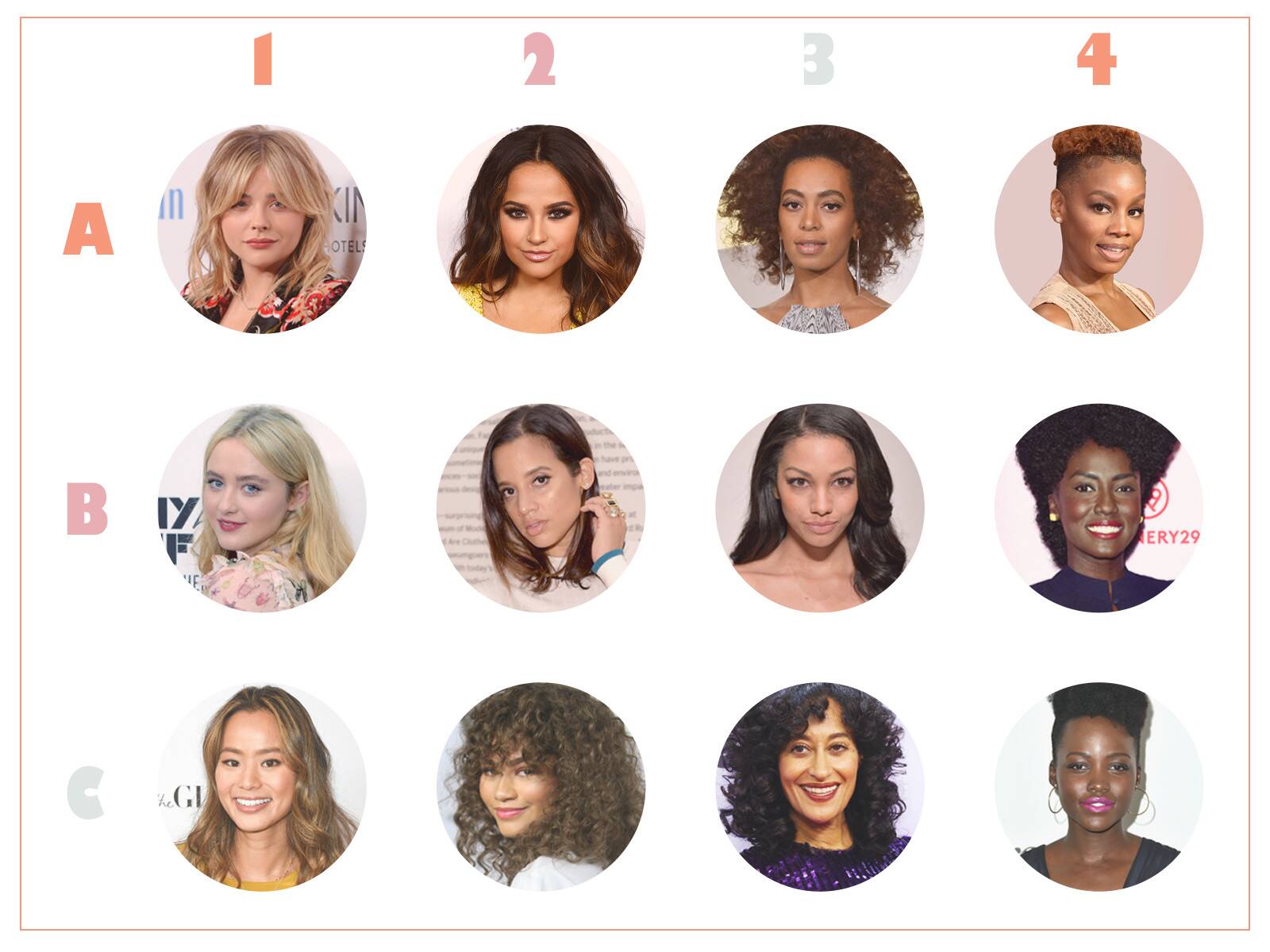
So, are you ready to learn more about the interesting science of hair? It will not only make it easy for you to choose the right products, but it will also teach you important things about hair health and appearance. This is a great product for locking in moisture, ensuring strands stay hydrated throughout the day.
Hairstyles for Fine vs. Coarse Hair
11 Best Shampoos 2024 The Strategist - New York Magazine
11 Best Shampoos 2024 The Strategist.
Posted: Wed, 17 Apr 2024 07:00:00 GMT [source]
One thing The Curl Whisperer salon doesn’t advocate for is protective styles like weaves and braids. Lovelace recommends using a diffuser, a toothy devise that snaps onto the end of your blow dryer and helps eliminate the frizz. Every time your hair goes through its growth cycle, those genetic characteristics are reasserted.
Hair texture
For those with straight hair, it’s important to remember that your locks may be prone to getting greasy faster than other types. Straight hair, the first category in our comprehensive guide on hair types, is distinguished by its sleek, smooth texture and shine. Common among African American women, these tightly coiled locks may appear robust due to several strands packed together, but they’re surprisingly fragile when dealt with individually. Unsurprisingly there are three distinct categories within this type as well – namely 4A/4B/4C. If you have straight hair, you most likely deal with limp locks and oily strands. Knowing your hair type is super helpful when choosing the right styling products, explains Candace Mitchell Harris, CEO and co-founder of Myavana, a beauty technology company.
Captain Blankenship Nourish Hair & Scalp Serum

3C tends to have the highest amount of volume, but also tends to have the most shrinkage. Stretch and enhance gently without heat with a flexi-rod set, twist-out, or a set of perm rods. All products featured on Allure are independently selected by our editors.
Strands with the 4B pattern are densely packed and can bend in sharp angles like the letter Z. "I love that it can be shaped in many different ways," says François. Neal sees Walker’s chart as a resource, a prism through which you can understand your hair.
How to Use Perm Rods On Natural Hair: A Step-by-Step Guide
To bulk up your intake, look for food products that have vitamin D added, such as some cereals and milk. Keep in mind that just because you have thick hair doesn’t necessarily mean you also have coarse hair. Hair with high porosity is more fragile and can easily dry out because the cuticle doesn’t trap moisture well. "But, while density and thickness can vary from person to person, how you take care of your hair can lead to changes in thickness and density," Josh cautions. "For thin hair, it’s generally a good idea to not wear your hair past your shoulders," Azadganian says. Long cuts "can make thin hair [look] thinner, which results in loss of style."
While hair type charts vary in what hair qualities they feature, one factor they always include is texture. Hair texture generally refers to the natural shape or pattern of your hair strands. If you’re unsure about which category you fall into, leave your hair free of products and let it air dry the next time you wash it. If it dries straight without a bend or curl, then you have straight hair (or type 1 hair as it is commonly referred to). If it dries with a slight curve or “S” shape, then it’s considered wavy hair (type 2). Both Type 2A and 2B hair are considered wavy, but they have some differences in their texture and curl pattern.
What Type of Hair Do I Have? Type 1, Type 2, Type 3 or Type 4?
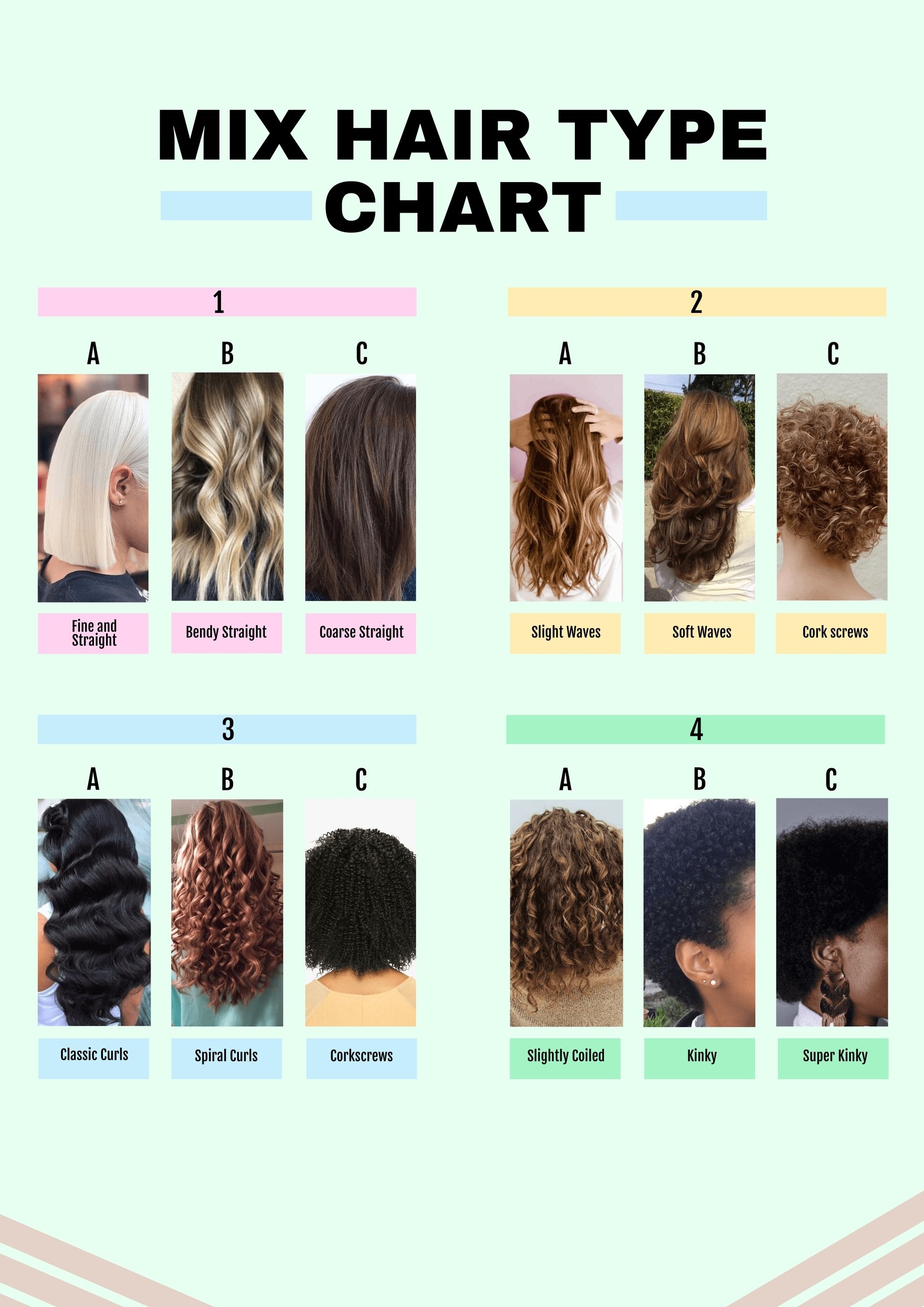
This hair type lies flatter at the crown with defined S-shape waves starting from the mid-length. Strands are thicker in diameter than a 2A, and you'll have to put a bit more elbow grease into getting it straight. She suggests that you pick a strand out of your hairbrush and hold it between your fingers.
Gua Sha Experts On How To Lift & Depuff Your Eyes In No Time
The biggest struggle for type 4 hair is keeping it adequately moisturized. Type 2B hair is the perfect example of the classic beach hair look. The naturally textured waves can feel frizzy or crunchy without proper moisture. Try a lightweight leave-in conditioner to make your waves soft and shiny without weighing them down.
Type 2C hair is thick and voluminous with a few budding curls in the mix. Straightening type 2C hair is a challenge, but rocking your natural waves is simple with a quality leave-in conditioner and finger-styling. Type 1B hair has a fuller body than type 1A, but each lock of hair is still very straight. You can quickly add volume with a texturizing spray focused on the roots before styling with a flat iron or blow dryer. There is no one definitive answer to the question of whether someone’s hair is 4a or 4c. Instead, the answer depends on a number of factors, including the individual’s hair texture and curl pattern.
We also compiled a few expert-recommended options to consider, as well as NBC Select staff favorites. To avoid adding extra oil, be mindful of the products you choose – heavy serums or butters may not be your friend here. If you have thin hair, avoid heavy products that could make it even flatter. Instead, try texture sprays and light mousses to add volume and lift. Those with thicker hair, on the other hand, will benefit from creams and butters that are thicker and less shiny. To keep hair from getting too heavy and dull from product buildup, use clarifying shampoos once a week and choose lighter products like mousses or milks to add volume.
To test your hair’s porosity, do a simple float test by placing a clean hair strand in a glass of water. If it sinks quickly, your hair has high porosity; if it floats, your hair has low porosity. Each of these categories has unique characteristics and requires special care. Additionally, within each category, there are various subtypes and textures that further define the nature of your hair. You can also tell your hair’s structure by how well it holds a hairstyle, especially with straight and wavy hair.
To determine your hair type, wash it and let it air-dry without adding any products. Next, compare your hair’s natural pattern and texture to hair typing charts or descriptions. Textures with 4C curls are similar to 4Bs, but the tightly coiled strands are more fragile and have a very tight zigzag pattern that is sometimes indiscernible to the eye. This hair type experiences the greatest amount of shrinkage—about 75% or more—compared to the other textures. To figure out your hair type once and for all, use the strand and ponytail tests to determine your hair thickness and density. Then, make the most of whatever hair you've got with the proper cut, care, and styling products.
On the other hand, if it’s easy to see your skin without a part, you have low-density hair. First of all, it’s important to know that your hair type is mostly determined by your genes. It’s important to understand that within this category, there are subcategories – 3A, 3B, and 3C. Subcategories include 1A, 1B, and 1C but don’t fret about differentiating between these, as your care routine doesn’t change drastically with each subcategory.
If you can see your scalp even without parting your hair, you probably have low hair density. When hair professionals talk about porosity, they mean your hair’s ability to soak up moisture. If your hair is highly porous, it has a lot of holes in its surface layer, called the cuticle. Instead of combing, which can lead to frizz and breakage, use a leave-in conditioner and rake through wet hair with your fingertips. The American Academy of Dermatology recommends that you air-dry instead of using a blow dryer.
These subclassifications, which are based on the diameter of the hair’s wave, curl, or coil, are borrowed directly from the original Andre Walker hair typing system. Prior to examining your hair, be sure that it has been recently washed (rinsed in cold water) and doesn’t have any hair products applied to it. Finally, it’s important to note that you may have several different LOIS hair patterns on your head. When this occurs, the system allows you to combine LOIS letters to determine your hair pattern. I would imagine that the Type 4C hair type was created by a member within the natural hair community – just like the Type 3C hair type.


No comments:
Post a Comment